Overview
Overview – Neurodevelopmental Disorders (NDD)
Neurodevelopmental Disorders include a range of conditions with onset in the early developmental period of childhood, typically before the child enters grade school. Neurodevelopment orders are characterized by developmental deficits that produce impairments of personal, social, academic, or occupational functioning. The range of developmental deficits varies from very specific limitations of learning or control of executive functions to global impairments of social skills or intelligence. While the symptoms and behaviors of often change or evolve as a child grows older, some disorders are permanent.
Neurodevelopmental Disorders tend to involve dysregulation of the amygdalae, two tiny organs within the limbic system deep in the brain. The amygdalae’s job is to recognize danger and threats and prepare the body to activate Fight-Flight or Conserve-Withdraw. The dysregulation results in an inappropriate response to stimuli. Overactive amygdalae function can produce excessive anxiety and risk aversion, as well as avoidance of social interaction. Underactive amygdalae function can result in high-risk behavior and inappropriate social behavior. Neurodevelopmental Disorders include at least the following:
| ADHD Autism spectrum disorder bipolar Disorder (may not be diagnosed until adulthood) Cerebral palsy (CP) Disorders of communication, speech, and language Down Syndrome Seizure disorder | Fetal Alcohol Syndrome Fragile X Syndrome (FXS) Obsessive-Compulsive Disorder Rett Syndrome Tic Disorders William’s Syndrome Schizophrenia (may not be diagnosed until late teens but symptoms may be present earlier) |
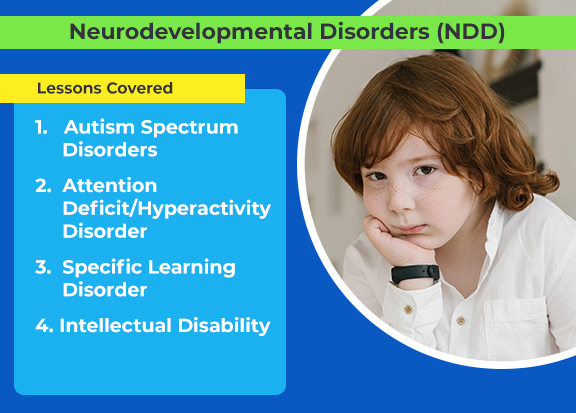
Neurodevelopmental Disorders presents information on four types of disorders, one type each day for four days. These are:
- Autism Spectrum Disorders
- Attention Deficit/Hyperactivity Disorder
- Specific Learning Disorder
- Intellectual disorder
On the fifth day, the Team reviews each of the four Neurodevelopmental Disorders, helping you to fix the information in your memory and to reaffirm the strategies for dealing with each type. Typically, the average adult needs to review information three or four times to move it from short-term memory into long-term memory.
This concludes the Overview for Neurodevelopmental Disorders.