Overview
Overview – Substance-Related & Addictive Disorders, Part 1
A diagnosis of Substance-Related & Addictive Disorders is based on evidence of impaired control, social impairment, risky use, and pharmacological criteria. There is a high prevalence of comorbidity between substance use disorders and other mental illnesses—many areas of the brain are affected by both substance use disorders and other mental illnesses. For example, the Brain Reward System and pathways or circuits that impact decision making, impulse control, and emotions may be affected by addictive substances and disrupted in substance use disorders, depression, schizophrenia, and other psychiatric disorders. Multiple neurotransmitter systems also have been implicated in both substance use disorders and other mental disorders, including dopamine, serotonin, glutamate, GABA, and norepinephrine.
Many different types and classifications of substances produce common short-term effects that may include increased heart rate and high blood pressure, dizziness, tremors, mood changes, and paranoia. In high dosages, the risk increases for heart attack, stroke, respiratory failure, and coma. Long-term substance misuse may lead to immune deficiencies, organ damage, paranoia, and psychosis. Overdose is often a risk as individuals gradually develop tolerance and must increase the dosage or the exposure to achieve the same brain result. Symptoms of an overdose may include agitation, seizures, hallucinations, difficulty breathing, nausea and vomiting, unsteady gait, violent or aggressive behavior, and coma.
Risk factors vary. Emerging consensus is that addictive behaviors result from a combination of 40-60 percent inheritable genetic traits; epigenetics, that includes everything that is not genetics, such as environment, Adverse Childhood Experiences (ACEs), extreme or chronic stress, lifestyle choices, and learned behaviors. In other words, individuals may be at higher risk for addictive behaviors based on genetics and acted upon by epigenetics, with exposure to substances or addictive processes serving as a catalyst for revealing addictive tendencies.
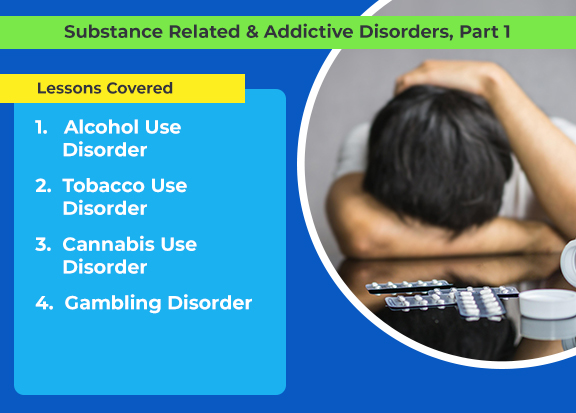
Substance-Related & Addictive Disorders, Part 1, presents information on four types of disorders, one type each day for four days. These are:
- Alcohol Use Disorder
- Tobacco Use Disorder
- Cannabis Use Disorder
- Gambling Disorder
On the fifth day, the Team reviews each of the four disorders, helping you to fix the information in your memory and to reaffirm the strategies for dealing with each type. Typically, the average person needs to review information three or four times to move it from short-term memory into long-term memory.