Overview
Overview – Substance-Related & Addictive Disorders, Part 2
Substance-Related & Addictive Disorders involve the persistent use of drugs despite substantial harm and adverse consequences. These disorders are characterized by an array of mental, emotional, physical, and behavioral problems such as chronic guilt; an inability to reduce or stop consuming the substance(s) despite repeated attempts; driving while intoxicated; and physiological withdrawal symptoms. Drug classes that are involved include alcohol; cannabis; phencyclidine and other hallucinogens, such as arylcyclohexylamines; inhalants; opioids; sedatives, hypnotics, or anxiolytics; stimulants; tobacco products; and other or unknown substances.
Eleven symptoms have been identified to assist in characterizing the severity of an individual’s addiction. These help to differentiate between mild, moderate, and severe states of the disorders. For example:
- One symptom suggests that the individual is at risk.
- Two or three symptoms point to a mild substance use disorder.
- Four or five symptoms indicate a moderate substance use disorder.
- Six or more criteria identify a severe substance use disorder, which signals an addiction to that substance
Substance-Related & Addictive Disorders, Part 1, presented information on four types of disorders. These were:
- Alcohol Use Disorder
- Tobacco Use Disorder
- Cannabis Use Disorder
- Gambling Disorder
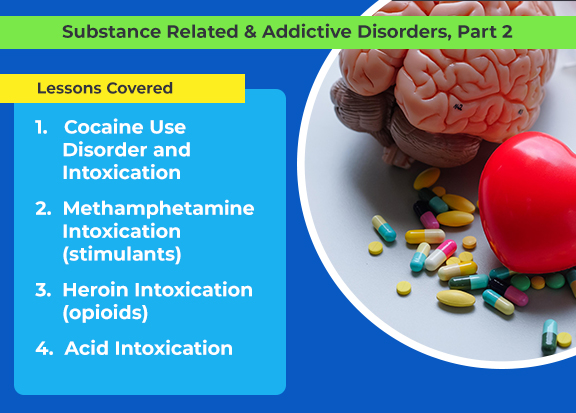
Substance-Related & Addictive Disorders, Part 2, presents information on four additional types of disorders, one type each day for four days. These are:
- Cocaine Use Disorder and Intoxication
- Methamphetamine Intoxication (stimulants)
- Heroin intoxication (opioids)
- Acid Intoxication (other hallucinogen intoxication or “acid trip”)
On the fifth day, we review each of the four additional disorders, helping you to fix the information in your memory and to reaffirm the strategies for dealing with each type. Typically, the average person needs to review information three or four times to move it from short-term memory into long-term memory.